
A compact air handler
A single, relatively small indoor unit handles conditioning and airflow — usually installed in an attic, basement or dedicated closet.
Specialties / High-Velocity HVAC
— What Is High-Velocity HVAC?
High-velocity systems solve a specific problem — bringing whole-home conditioned air to houses where conventional trunk-and-branch ducts aren't practical.
A single, relatively small indoor unit handles conditioning and airflow — usually installed in an attic, basement or dedicated closet.
Insulated flexible tubing routes through wall cavities, closets and joist bays where a rigid trunk-and-branch duct system won't fit.
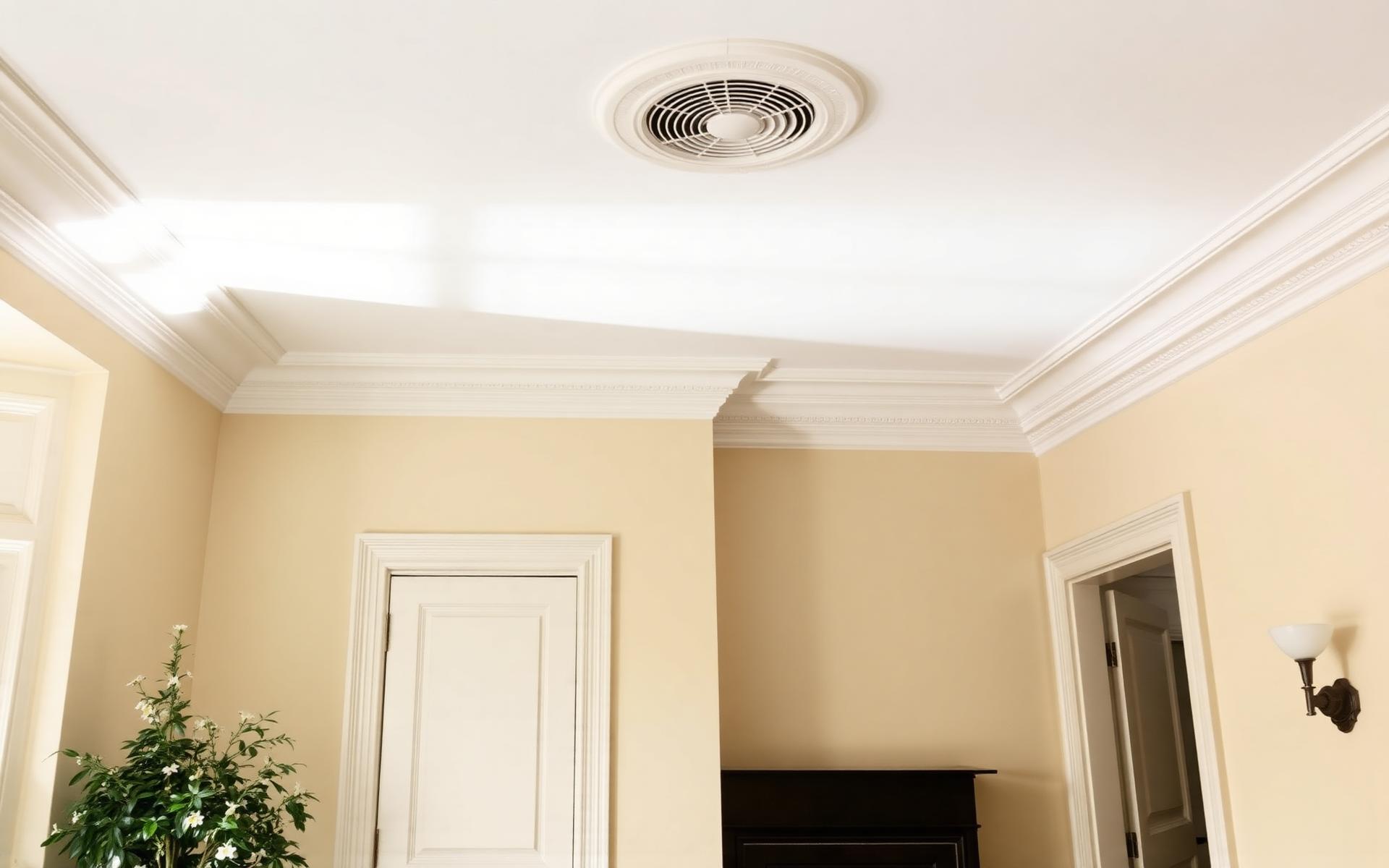
Discreet round or slot outlets — often just a few inches across — deliver air into each conditioned room. They can be placed in ceilings, walls or floors.
Air is delivered at higher velocity than in a conventional system. The result is strong mixing that tends to even out room temperatures and reduce stratification.
High-velocity air handlers can be configured for cooling with a hot-water or refrigerant coil for heating, or paired with a heat pump for both — the distribution stays the same.
The compact distribution is what makes the system worth considering: it can bring whole-home comfort to a house that can't accept conventional ducts.
— Where It Works Well
High-velocity earns its place in specific situations. Where it fits, it fits better than the alternatives; where it doesn't, other systems are more appropriate.
Homes with plaster walls, narrow cavities and no existing ductwork — where the appeal of high-velocity is precisely that it fits where nothing else will.
Radiator-heated homes that need cooling, or homes with only partial ductwork from a previous renovation.
Whole-home renovations where finished surfaces will be opened anyway — an opportunity to route a system with minimal added disruption.
Three-storey and semi-detached homes where getting air to upper floors through a conventional duct system requires large bulkheads.
Houses with original mouldings, cornices and ceilings you don't want to compromise for HVAC.
Where the air handler and manifold can live in an existing utility space rather than eating a closet or a mechanical room.
— Benefits
These are the reasons homeowners and designers keep coming back to high-velocity — not marketing claims, but the actual working benefits.
Flexible small-diameter runs fit through spaces conventional ducts can't — dramatically reducing structural work.
Fewer bulkheads, fewer soffits, less patching. In many older homes the difference is between a manageable retrofit and one that isn't.
Small outlets can be finished to blend into ceilings and walls, without the visual weight of standard registers.
The higher velocity and directional throw of the outlets tend to reduce hot and cold spots within rooms.
Delivers cooling across every conditioned room — an advantage over ductless systems, which handle rooms in zones.
The distribution can pair with an existing boiler for heat, a heat pump for both, or a dedicated cooling coil — giving flexibility over time.
— Design Considerations
A high-velocity system is only as good as its design. These are the decisions that determine whether the finished result is quiet, comfortable and reliable — or the opposite.
Sizing is based on a real heat-loss and heat-gain calculation for the house — not a rule of thumb. Undersized systems can't hold conditions; oversized systems short-cycle.
Each room's air volume, layout and use determines how many outlets it needs and where they belong. Placement affects both comfort and visual result.
Return-air pathways get less attention than they deserve. High-velocity systems especially need adequate returns to work quietly and consistently.
Sound attenuators on the supply plenum, careful outlet placement and proper duct routing keep the system quiet in a lived-in home.
Air handler location affects duct lengths, static pressure, service access and noise. It's a design decision, not just a matter of what fits.
Small-diameter ducts run at higher static pressures than conventional ducts. Duct lengths, bends and terminations all have to be counted, not estimated.
Route selection is often the hardest part of the design — balancing the shortest paths, the least disruption and future serviceability.
In cooling mode, cold ducts in warm cavities need proper insulation and vapour management to avoid condensation.
Filters, coils, controls and manifolds all need to be reachable. A design that hides everything is one that costs more to service.
Multiple zones — often by floor — solve comfort issues that no single-zone system can, especially in multi-storey homes.
Pairing with a boiler, heat pump or standalone cooling coil needs careful control and airflow planning to work as one system.
— High Velocity vs Other Options
Every distribution approach has strengths and compromises. The right choice is the one that fits the house and the way you want to live in it.
— Existing-System Repair and Replacement
High-velocity systems are long-lived when they're well designed. Over time they still need service and, eventually, component replacement.
Troubleshooting comfort or performance issues in an existing high-velocity system — from airflow to controls to refrigerant.
Replacing an aging air handler while retaining the existing duct distribution where it's in good condition.
Cooling coils and hydronic coils can be replaced independently when they fail, without replacing the whole system.
Replacing the outdoor condensing unit or upgrading to a heat pump while keeping the existing indoor air handler and ductwork.
Rebalancing, sound attenuator changes and return-air adjustments to correct comfort or noise problems.
Adding, moving or capping outlets after renovations that change how rooms are used.
Modern thermostats, zoning controls and communicating equipment can often be retrofitted to an older high-velocity system.
— Related Reading
— FAQ
What homeowners most often ask before adding a high-velocity system.
Still not sure? Contact us and we'll help you decide the right next step.
A well-designed system with proper sound attenuators, correctly sized ducts and thoughtful outlet placement runs at a low, steady sound level in most homes. Noise complaints usually trace back to design shortcuts — undersized returns, missing attenuators or poor outlet placement — not the technology itself.
Yes. High-velocity air handlers can be paired with a hydronic heating coil, a refrigerant heating coil or a heat pump. The distribution ducts and outlets are the same for either mode.
Yes. A hot-water coil in the air handler lets an existing or new boiler provide heat through the high-velocity distribution — a common setup in older Toronto homes that keep their radiators for primary heat.
Yes. A high-velocity air handler paired with an outdoor heat pump provides both heating and cooling through the same distribution, often as part of a hybrid setup with an existing furnace or boiler.
Standard supply outlets are small — typically a couple of inches across — and can be finished in ceilings or walls where they read as trim rather than as a register. Slim linear diffusers are available where a different look is preferred.
Yes. Zoning by floor is common; more granular zoning is possible but adds complexity. Zoning decisions should be made during design, not added later.
It's specifically well suited to finished homes — that's the reason it exists. The small ducts route through cavities that conventional systems can't use, keeping construction limited.
Ductless is often less invasive and simpler to zone; high-velocity provides more uniform whole-home coverage without visible indoor units. The right answer depends on the home, the aesthetic preference and how you want to zone.
Usually, yes. Air handlers, coils, condensers and controls can be replaced or upgraded while keeping the existing duct distribution — provided the ducts are in good condition and correctly sized.
Every conditioned room needs at least one outlet, and larger rooms may need more. Design is based on the air volume each room needs, not a fixed rule per square foot.
— Get Started
Every high-velocity project starts with the house, not the equipment. Tell us about your home and we'll help you decide if it's the right fit.
Or call 416-580-HEAT (4328)