
The boiler
The heart of the system. Heats water to a controlled temperature and delivers it into the distribution loop.
Specialties / Hydronic Heating
— What Is Hydronic Heating?
Instead of blowing warm air through ducts, hydronic systems circulate heated water through pipes to radiators, baseboards or radiant tubing. The components are simple in principle and long-lived when properly designed.
The heart of the system. Heats water to a controlled temperature and delivers it into the distribution loop.
Insulated piping carries warm water from the boiler to each heat emitter and back again in a closed loop.
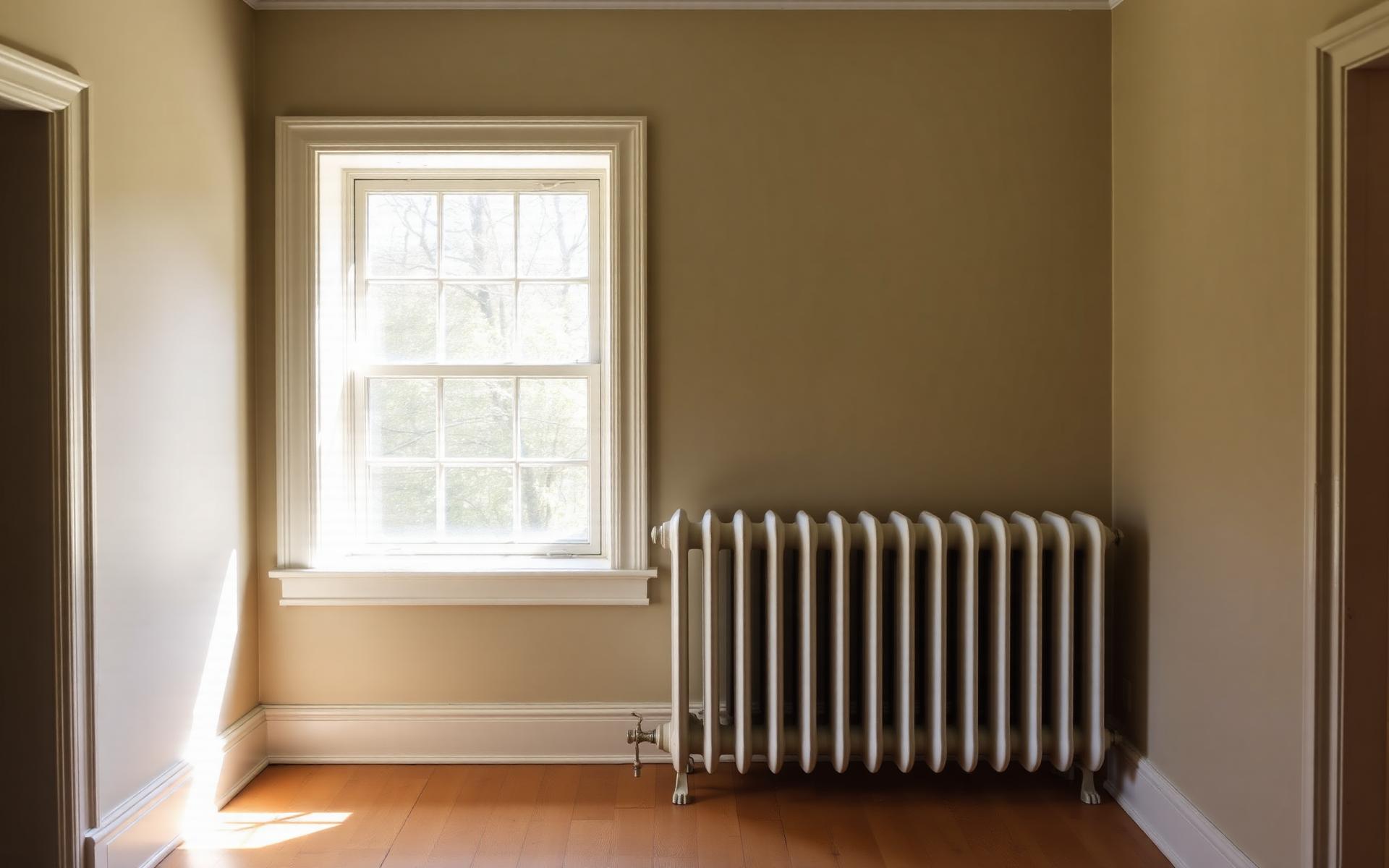
Cast-iron, panel or column radiators release heat into the room by a mix of radiation and gentle convection.
Finned copper elements in a low enclosure along the base of a wall — common in additions and finished basements.
Loops of PEX tubing embedded in a floor slab or under a finished floor turn the floor itself into a large, gentle heat emitter.
Low-wattage pumps move water through zones. Modern variable-speed pumps adjust flow to the actual heat demand.
Zones let different areas be controlled independently. Valves and manifolds route flow to whichever zones are calling for heat.
Thermostats, aquastats and outdoor-reset controllers manage water temperature and pump operation for comfort and efficiency.
Expansion tanks, air separators and pressure-relief valves keep the system safe as water expands, contracts and releases dissolved air.
— Types of Hydronic Systems
Hydronic systems can take many forms depending on the house, the era and the renovation history. Most Toronto homes with hydronic heat combine several of the following.
Common in older Toronto homes. Extremely durable, hold their heat gently after the boiler cycles off, and typically work well with new high-efficiency boilers.
Slim steel panels with a modern look. Well suited to renovations that want hydronic heat without the visual weight of cast iron.
Finned copper elements in low enclosures. Cost-effective and easy to zone; common in finished basements, additions and secondary spaces.
PEX tubing under the finished floor. Very quiet, very even, and especially good in bathrooms, kitchens, additions and open spaces.
Small forced-air units fed by hot water — useful where a room needs quick response or an existing radiator can't be placed.
A hot-water coil in a forced-air handler lets a boiler provide heat through a duct system — often paired with high-velocity distribution.
The system is divided into independent zones — commonly by floor or by use — each with its own thermostat and control.
A single appliance provides both space heating and domestic hot water — well suited to smaller homes or where mechanical space is tight.
— Benefits
Hydronic isn't universally better than forced air — but where it fits, it fits particularly well. These are the practical benefits homeowners consistently point to.
No blowers, no forced air movement — just gentle circulation and radiant warmth. Comfortably invisible in a lived-in home.
Hydronic systems are inherently easy to zone. Different floors or wings can hold different temperatures without a duct redesign.
Radiators and radiant floors heat rooms partly by radiation, which many people describe as feeling more comfortable at a lower air temperature.
Existing radiators, piping and distribution can usually be reused when the boiler is replaced or the system is upgraded.
The same boiler and distribution can serve radiators, baseboards and radiant floors — mixed in whatever way each room calls for.
Compared to forced-air heating, hydronic systems move much less air — which many homeowners prefer for comfort and cleanliness.
Radiant zones can be added during a renovation without redesigning the whole system — a single boiler can serve old and new parts of the home together.
— Common Hydronic Problems
Hydronic systems tend to develop problems in familiar patterns. Recognizing them early usually keeps the repair small.
Some rooms run warm, others stay cold. Usually a balancing, zoning or flow issue rather than an undersized boiler.
Air pockets block flow and stop heat from reaching radiators. Proper air separation and periodic venting keep the system moving.
Water hammer, thermal expansion noise or trapped air. Each has a different cause and a different fix.
A pump that has failed, seized or lost its impeller — often the reason one zone stops heating while others still work.
A stuck-open valve heats a zone that isn't calling for heat; a stuck-closed valve leaves a zone cold. Both are diagnosable and repairable.
System pressure that's too low, too high or unstable typically points to a fill-valve, expansion-tank or leak issue that needs proper diagnosis.
A waterlogged or failed expansion tank causes pressure spikes and relief-valve discharge. Usually a straightforward, low-cost repair.
Fittings, valves, air vents and expansion components are the usual suspects — with piping itself typically failing last.
One cold radiator in an otherwise warm home is almost always local — an air lock, a stuck valve or an isolation valve someone closed at some point.
Thermostats, aquastats and reset controllers wear out and drift. Modern controls can often be retrofitted to older systems.
A boiler that turns on and off frequently is usually oversized, poorly controlled or fighting a distribution problem — not simply failing.
— Repair, Upgrade or Replace?
A hydronic system that's misbehaving rarely needs to be scrapped. In most cases, the right work is targeted — a control, a pump, a zone, or eventually the boiler.
Most hydronic issues are component-level — a pump, valve, expansion tank or control — not a full system failure.
Outdoor-reset controllers, modern thermostats and zoning upgrades often improve comfort and efficiency without touching the boiler or emitters.
Rebalancing, adding air separation and updating pumping can fix comfort issues that have been blamed on the boiler for years.
Splitting an existing system into more zones — commonly by floor — is one of the highest-impact comfort upgrades in an older home.
Replacing an older atmospheric or cast-iron boiler with a modern high-efficiency or condensing unit — typically without changing the radiators or piping.
Modern variable-speed circulators use a fraction of the power of older pumps and adjust to actual demand instead of running flat out.
New bathrooms, additions or renovated floors can be added as radiant zones on the same boiler that serves the rest of the house.
Cast-iron radiators are typically kept when a system is upgraded. They're durable, comfortable and part of the character of the house.
Modern condensing boilers, low-mass pumps and smart controls can be integrated with older distribution to bring the whole system up to date.
— Hydronic System Planning
A hydronic system is a set of decisions long before it's a set of parts. These are the elements that determine whether the finished result is quiet, efficient and comfortable — or the opposite.
A room-by-room heat-loss calculation drives everything else. Without it, sizing is guesswork.
Different emitters — cast iron, panel, baseboard, radiant floor — want different water temperatures. Getting this right protects comfort and efficiency.
Each emitter has to be sized to deliver the room's heat loss at the design water temperature — not simply chosen to fit the wall.
Pumps are selected to match the flow and head each zone actually needs — under-pumped systems starve emitters; over-pumped systems waste energy and add noise.
Zoning strategy — by floor, by use, by orientation — needs to be decided as part of the design, not retrofitted onto a single-zone system.
Adjusting water temperature based on outdoor conditions improves comfort and lets modern condensing boilers work at their most efficient.
Fresh fill water, corrosion inhibitors and glycol where appropriate — small choices with large long-term implications for the system.
A proper flush during major work removes sediment and old inhibitor — often the difference between a smooth restart and a series of service calls.
A properly located air separator is one of the least glamorous but most important components in the system.
An expansion tank that's correctly sized and pressurized keeps system pressure stable through every heating cycle.
Isolation valves, drains and gauges in the right places make future service faster, cleaner and less expensive.
— FAQ
Common questions from homeowners with hydronic systems — or considering one.
Still not sure? Contact us and we'll help you decide the right next step.
In most cases, yes. Cast-iron radiators are extremely durable and typically work well with a new high-efficiency or condensing boiler. Piping, valves, controls and expansion components are usually the elements that need attention rather than the radiators themselves.
Almost always a local issue — trapped air, a stuck valve, a partially closed isolation valve or a flow imbalance between zones. Balancing and venting solve it more often than replacing the boiler does.
Most residential hydronic systems in Toronto homes provide heating only. Cooling is usually added as a separate system — ductless, high-velocity or conventional — that runs alongside the hydronic heat.
Yes, and easily. Hydronic systems are inherently well suited to zoning — different floors, wings or rooms can be controlled independently without a duct redesign.
A control strategy that adjusts the boiler's water temperature based on outdoor conditions. On mild days the system runs cooler; on cold days it runs warmer. It improves comfort and lets modern boilers operate closer to their most efficient point.
Yes. Radiant zones are commonly added during renovations — new bathrooms, kitchens, additions and slab floors. Existing radiators or baseboards in the rest of the house can stay, all served by the same boiler.
Common causes include trapped air, thermal expansion against fixed supports, water hammer at valves and, occasionally, undersized piping. Each has a specific fix — replacing components rarely solves noise on its own.
Annually is typical. A proper visit includes checking pressure and expansion, inspecting the boiler, verifying controls, cleaning as needed and confirming safeties. Well-maintained hydronic systems are among the longest-lived in a home.
Air-to-water heat pumps can serve some hydronic systems, particularly low-temperature ones like radiant floors or oversized emitters. Applying them to older high-temperature radiator systems is more nuanced and needs careful case-by-case evaluation.
During major work — a boiler replacement, significant piping changes or a persistent debris problem — a flush is often worth doing. Routine, unnecessary flushing of a healthy system generally isn't.
— Get Started
Whether you're planning a renovation, replacing a boiler or just trying to solve a comfort problem, we're happy to walk through the options.
Or call 416-580-HEAT (4328)